CHEVROLET TRUCK VCHEV20 Van Wiper Transmission 621-00139 71-91 10/20/30
fits make: Chevy, Chevrolet. year: 1992–1995.
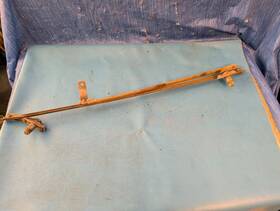
( Brand: Chevrolet Truck ), ( Manufacturer Part Number: VCHEV20 ), ( Part Type: Wiper Transmission ), ( Genuine Oem: Yes ), ( Ipn: 621-00139 ), ( Make: Chevrolet ), ( Year: 1994 )
Review CHEVROLET TRUCK 71-91 Chevy Van 10/20/30 Wiper Transmission fits 1992–1995
The **Chevrolet 621-00139** is a meticulously engineered, high-performance **wiper transmission** designed exclusively for **Chevrolet 10/20/30-series vans** produced between **1971 and 1995**, including models from the **C10, C20, and C30** generations. This transmission serves as the critical mechanical interface between the windshield wiper motor and the wiper arms, ensuring smooth, synchronized operation while withstanding the rigors of daily use in commercial, fleet, or personal applications. Built with **durable cast aluminum housing** and reinforced internal components, the 621-00139 is engineered to resist wear, corrosion, and misalignment, making it a long-lasting solution for vehicles that demand reliability. Its **precision-machined gear assembly** delivers consistent, low-friction movement, reducing the strain on the wiper motor while maintaining optimal wipe patterns across large or angled windshields. Whether installed in a **classic step-side van, a high-roof cargo model, or a modernized fleet vehicle**, this transmission ensures that wipers operate with **silent efficiency**, minimizing vibration and preventing premature failure of the wiper linkage. Compatible with **Chevrolet s original wiper arm and blade systems** from the late 1970s through the mid-1990s, this part is a direct-fit replacement for OEM failures, offering the same performance as the factory unit without the need for extensive modifications. Ideal for **restoration projects, fleet maintenance, or emergency repairs**, the 621-00139 is a testament to Chevrolet s engineering legacy, blending **simplicity with durability** to keep drivers and operators clear of obstructions in all weather conditions.
Buying a used Chevrolet 621-00139 series van (commonly referred to as the "10/20/30" or "350" series, depending on the engine and transmission configuration) from the late 1970s to mid-1990s can be a practical choice for certain buyers, but it comes with significant trade-offs. Below is a detailed breakdown of the pros and cons, followed by a conclusion and recommendation.
---
### **Pros of Buying a Chevrolet 621-00139 Van**
1. **Durability and Reliability (When Maintained Properly)**
- These vans were built to last, especially the **350 V8 engine** variants (commonly paired with the 700R4 or 4L60 transmission). With regular maintenance, they can easily exceed 200,000 300,000 miles.
- The **frame and body structure** are robust, designed for heavy-duty use, making them suitable for commercial, recreational, or off-road applications.
2. **Versatility and Customization Potential**
- The van s **spacious cargo area** (especially in the 10/20/30 series) allows for extensive modifications, from camper conversions to mobile workshops or food trucks.
- Aftermarket support is strong, with parts readily available for engines, transmissions, and suspension components.
3. **Lower Upfront Cost**
- Compared to modern full-size vans or trucks, these older models are **significantly cheaper** to purchase, often in the **$3,000 $10,000 range** depending on condition.
- Insurance and registration costs are also lower than for newer vehicles.
4. **Strong Engine Options**
- The **350 V8 (LB4, LB7, LG4, etc.)** is a workhorse engine, capable of handling heavy loads, towing, and high-mileage use with proper maintenance.
- The **305 V6** (in earlier models) is simpler and cheaper to repair but less powerful.
- **Automatic transmissions** (700R4, 4L60, 4L65) are robust and can last decades with fluid changes.
5. **Off-Road and Overlanding Capability**
- With **lift kits, heavy-duty suspension, and 4WD conversions**, these vans can be adapted for rugged use, making them popular among overlanders and adventurers.
- The **high ground clearance** (especially in 10/20/30 models) helps with rough terrain.
6. **Community and Support**
- There is a **dedicated enthusiast community** (forums like ChevyVanForums, Facebook groups) that shares knowledge on repairs, modifications, and restoration.
- Parts (especially for the 350 engine and 700R4/4L60 transmissions) are widely available, though some may require sourcing from junkyards or specialty suppliers.
7. **Fuel Efficiency (Compared to Modern V8s)**
- While not great by today s standards, the **350 V8 with an automatic** gets **10 15 MPG highway**, which is better than a modern diesel truck in some cases and far more efficient than a gas-guzzling muscle car.
---
### **Cons of Buying a Chevrolet 621-00139 Van**
1. **High Maintenance Requirements**
- **Engine:** The 350 V8 is powerful but **prone to oil leaks, rod knock, and valve train issues** if not maintained. Regular **valve adjustments, oil changes, and cooling system checks** are critical.
- **Transmission:** The **700R4 and 4L60** are durable but **require frequent fluid changes** (every 30K 50K miles) to prevent failure. Clutch packs and bands wear out over time.
- **Suspension and Steering:** **Ball joints, tie rods, and bushings** wear out quickly, leading to handling issues. **Power steering pumps** often fail without maintenance.
- **Brakes:** **Drum brakes** (common in older models) wear out fast and require frequent adjustments. **Rust** can also compromise brake lines and rotors.
2. **Rust and Structural Issues**
- Many of these vans, especially those from the **late '70s to early '90s**, suffer from **frame rust**, particularly in the **floor pans, wheel wells, and rear subframe**.
- **Body rust** (roof, doors, rocker panels) can lead to leaks and structural weakness.
- A **thorough inspection** (or a lift to check the undercarriage) is **essential** before purchase.
3. **Electrical System Reliability**
- **Alternators and starters** fail frequently due to age. The **fuse box and wiring harness** can also be problematic, especially in older models.
- **Modern electronics** (GPS, Bluetooth, etc.) may not be compatible without modifications.
4. **Emissions and Modern Compliance**
- **Smog and emissions regulations** vary by state. Some older vans may **fail inspection** due to **EPA/California emissions standards** (especially pre-1996 models).
- **Exhaust and catalytic converter issues** are common, and replacements can be expensive.
5. **Safety Concerns**
- **Outdated safety features** (no ABS, poor side-impact protection, weak frame rails in some cases).
- **Tire wear** is often severe due to age, and **original tires** may be long past their useful life.
- **Rollover risk** is higher than in modern vans, especially with heavy loads or modifications.
6. **Fuel and Emissions Costs**
- **Gasoline prices** are a constant expense, and the van s **MPG is poor** compared to modern alternatives.
- **Diesel alternatives** (like the 6.0L Duramax in newer GMCs) offer better fuel efficiency but are not available in these older models.
7. **Parts and Labor Costs**
- While parts are **cheap**, **labor costs** can add up, especially if repairs require **specialized knowledge** (e.g., transmission rebuilds, engine overhauls).
- **Junkyard parts** may be necessary for rare components, increasing costs.
8. **Resale Value**
- These vans **lose value quickly** once purchased, making them a **poor long-term investment** unless you plan to keep them indefinitely.
9. **Driving Experience**
- **Ride quality** is **harsh** compared to modern vans, with **excessive body roll** and **noise** from aging components.
- **Manual transmissions** (if equipped) are **difficult to drive** in stop-and-go traffic.
- **Heating and cooling** systems are often **inefficient** and may require upgrades.
10. **Hidden Costs**
- **Unexpected repairs** (e.g., water pump failure, timing chain issues in later 350s) can be **expensive**.
- **Replacement of worn-out components** (e.g., driveshafts, control arms) adds up quickly.
---
### **Conclusion**
The Chevrolet 621-00139 van series is a **great choice for buyers who:**- **Prioritize durability and customization** over modern convenience.
- **Have mechanical skills or access to a trusted mechanic** for maintenance.
- **Plan to use the van for specialized purposes** (e.g., overlanding, commercial work, off-road adventures).
- **Are willing to invest time and money in repairs** to keep the vehicle running reliably.
- **Want a low-cost, high-utility vehicle** without expectations of long-term resale value.
However, it is **not ideal for buyers who:**- **Want a hassle-free, low-maintenance vehicle**.
- **Need reliable daily transportation** without frequent repairs.
- **Are concerned about safety, emissions compliance, or modern driving comforts**.
- **Cannot afford unexpected mechanical failures**.
---
### **Recommendation**
If you decide to buy one, follow these steps to **maximize your chances of success**:1. **Buy from a Reputable Seller**
- Avoid "as-is" purchases from private sellers without a **detailed history**. Instead, buy from a **trusted dealer, auction (like Copart), or a seller with a proven track record**.
- **Check for rust** (lift the van to inspect the frame, floor pans, and subframe).
2. **Get a Pre-Purchase Inspection (PPI)**
- Hire a **mechanic experienced with Chevy vans** to inspect:- **Engine** (compression test, oil leaks, valve train condition).
- **Transmission** (fluid condition, clutch packs, bands).
- **Suspension** (ball joints, bushings, shocks).
- **Brakes** (drums, rotors, hydraulic system).
- **Electrical system** (alternator, starter, wiring).
- **Rust and structural integrity**.
3. **Prioritize Maintenance**
- **Change transmission fluid every 30K 50K miles** (critical for longevity).
- **Check and replace fluids** (coolant, power steering, differential
Details:
SHIPS TO THE LOWER 48 STATES AT THIS PRICE. CHEVROLET 20 VAN 71-95. 1994 CHEVY VAN WIPER TRANSMISSION / LINKAGE. CHEVROLET 10 VAN 71-95.
part #: vchev20 prices
- $69.85-$155.82
specifications winshielwip:
- for makes: Chevy, Chevrolet
- for years: 1992-1995
- brand: Chevrolet Truck
- mpn: Vchev20
- part type: Wiper Transmission
- genuine oem: Yes
- ipn: 621-00139
- make: Chevrolet
- year: 1994
payments winshielwip:
- credit card: Diners-club
- wallet: Google-pay
- other
general winshielwip:
- Exterior Parts Accessories > Wipers Washers > Wiper Linkages, Transmissions Motors
- condition: Used
seller winshielwip:
- rating: 99.5%
- # reviews: 2206
- city: Medical Lake, Washington
returns winshielwip:
- paid by: Buyer
- time: 30 Days
- policy: Returns Accepted
shipping winshielwip:
- transit: 6-12 Days
- type: Fixed
- class: Standard
- service: Standard
- cost: $0.00
offer winshielwip:
- quantity: 1
- sold: 0
- availability: In Stock
- started: May 21, 2026
- options: Ship-to-home
Chevrolet Truck VCHEV20 Is Similar To:
- 10-27 Trico Nos Windshield Wiper Motor Cpm Ford Chevrolet Chrysler 1950 1955 (23.2% similar) It does appear to work with minor amount of vacuum. Minor shelf wear. Selling as a really nice core. The condition is excellent. New old stock nos Rico windshield wiper motor pn Com I am uncertain of the application though it appears similar to 1950'S era Chevrolet ford Studebaker etc buyer pays ...(December 4th, 2015)
- 1056 Danchuk Chevy Chevrolet Chrome Dash Script Emblem And Best (27.8% similar) Dank has the largest selection of quality 55, 56, 57 parts for your classic chevy project. Most large and or heavy items in our offers are shipped directly from the manufacturer to you. Includes chrome nuts and nozzles. CSS template chevy ''chevrolet'' chrome dash script emblem, 210 and 150 best ...(May 5th, 2018)
- 1063 Chevy Gm Chevrolet Impala Belair Biscayne Sedan Speed Electric Wiper (27.3% similar) Nos new old stock means that part was never installed but does not guarantee like condition. Flat rate shipping quote in lower 48 states USA only. APPLICATIONS:1958 chevy impala Blair Biscayne sedan...(September 29th, 2018)
- 1112-4954 Chevrolet Chevy Sedan Maybe Truck Wiper Arms (40.8% similar) Pair of new wiper arms for chevy sedan car maybe Trucks...(December 1st, 2018)
- 1115c 1115d Dynacorn Pair Of Chevrolet Gmc Truck Window Regulators (27.3% similar) Truck parts depot is a division of hydro-e-electric, who has been providing quality made products since cars from 1946 through present day...(August 7th, 2018)
- 12-45 1957 Chevrolet Passenger Car Rebuilt Trico Vacuum Wiper Motor 3 Yr Warr Chevy (31.6% similar) This motor has been completely rebuilt with new gaskets, valve parts and paddle. I can rebuild your motor like the one above for plus postage, 3 year warranty. Tested, works mint, 3 year warranty. I have personally rebuilt tens of thousands of Rico vacuum wiper motors. All I do is wipers. A couple ...(March 10th, 2016)
- 12508113 12391560 3779741 Nos 63-67 Chevrolet Corvette 65-67 Passenger Wiper Refills Anco Gm (30% similar) Dad sometimes had more than one. Sales are final and sold as is pictured. Whether you re looking for parts to keep your oldie on the road, restoring your dream cruiser, accessorizing your bomb, or riding slow in your low rider join our group of classic car fans...(January 9th, 2016)
- 15010223 Chevrolet Gmc Truck Blazer Nos Gm Windshield Wiper Blades (35.1% similar) This is only a guide line. These are obsolete made in the USA or Canada parts that dealers no longer stock. Nos does not mean perfect. Some of our nos parts have shelf wear or are missing the original boxes. Please here for more GMC Chevrolet Truck parts 2-NOS never used or installed...(September 16th, 2018)
- 155-56-57 Chevrolet Assortment Wiper Pivots And Cables Etc (31.5% similar) 6 wiper pivots,plus one pivot housing for parts, some cables broken, also 6 chrome pivot covers with some pits, one electric wiper motor housing for parts see pics all ANSIs Chevrolet misc...(November 25th, 2015)
- 15727144 General Motors Nos New Gm Chevrolet Gmc Truck Suv Windshield (29.3% similar) When you homepage just enter the year, make and or model of your vehicle in search bar. If you are out of the country please understand this while buying on item. Nos stripes, decals, electrical and mechanical parts important. This is a new old stock nos original gm windshield washer nozzle correct ...(March 2nd, 2018)
- 1752941-48 Fits Chevy Or Chevrolet (14.8% similar) Please know what you are buying on. This is what every street rod, hot rod or rat needs to keep that windshield water free. The arms and blades are of polished stainless steel. Ask before buying. Damaged merchandise must be held in the original master carton for inspection by common carrier. They ...(September 5th, 2017)